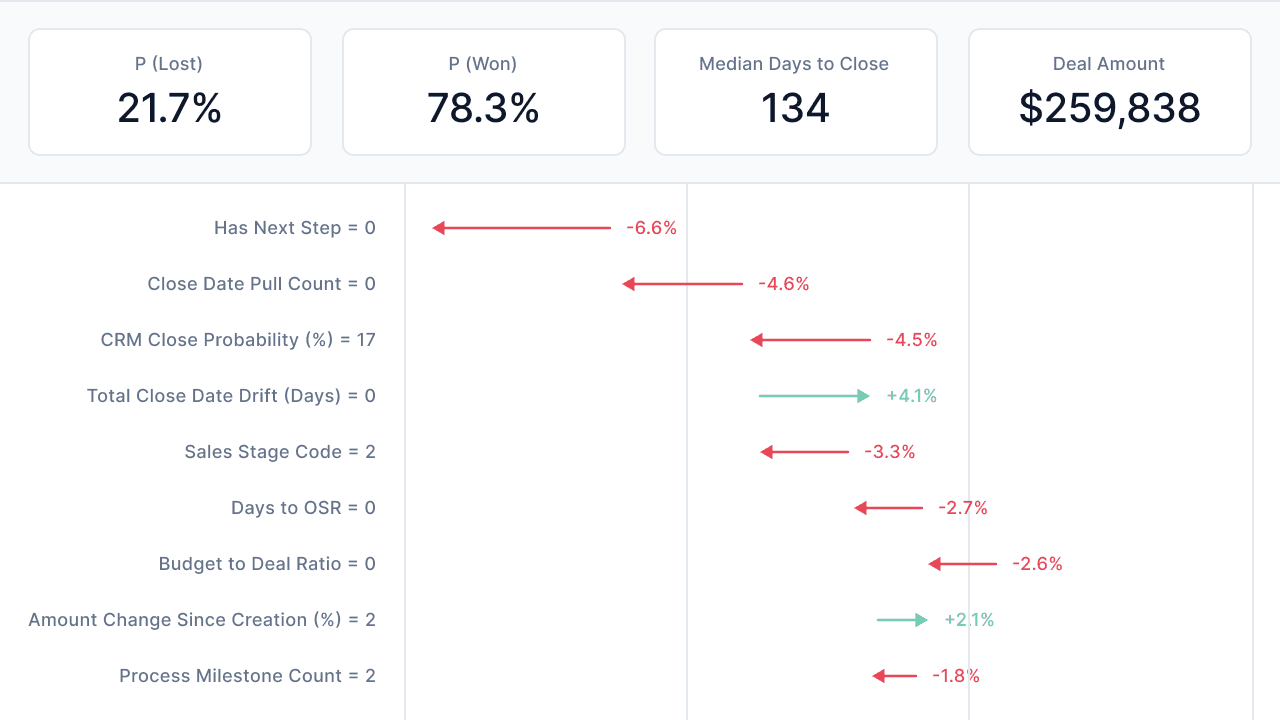
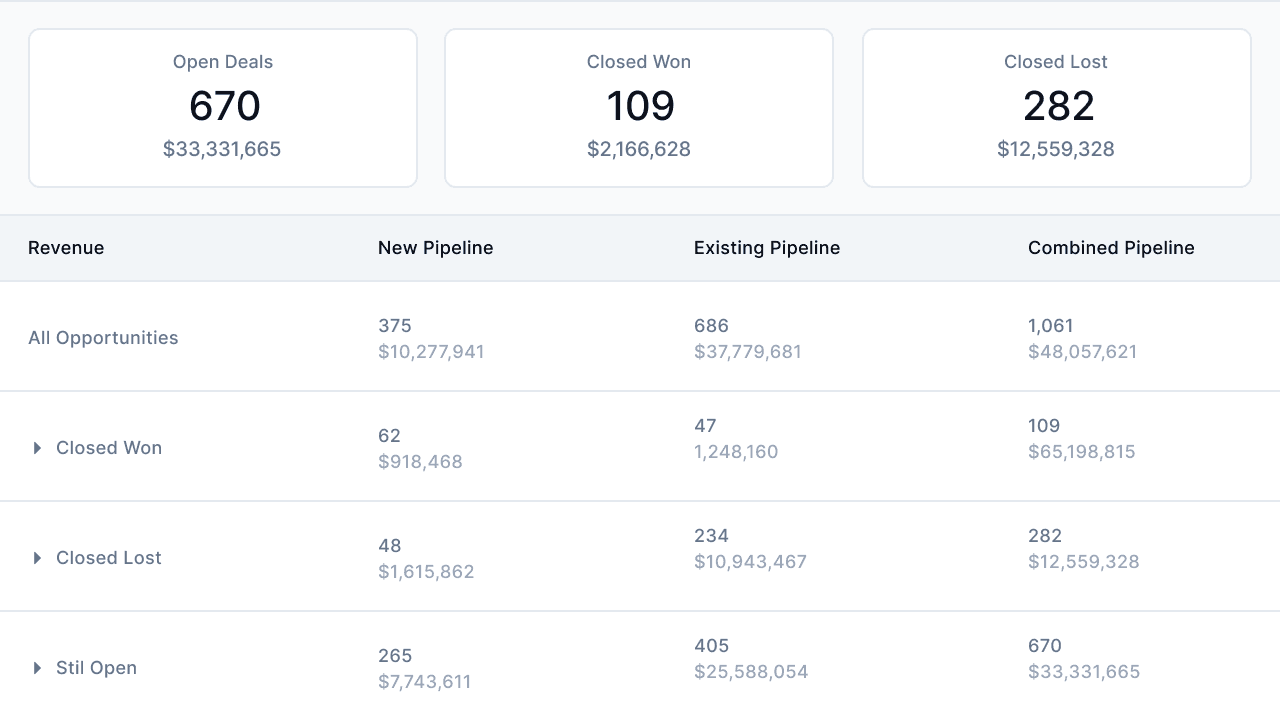


Funnel problems are invisible until they're forecast misses.
Stage conversion data exists in your CRM. What it doesn't do is surface where deals are slowing, which reps or segments are underperforming, or whether win rate changes are a trend or noise — without someone pulling and rebuilding the analysis every week.
By the time a pipeline problem shows up in a missed quarter, the window to fix it has already closed.
What it looks like when velocity is unclear:
Bookings targets missed without a clear explanation of where in the funnel it broke
Win rate changes are attributed to market conditions instead of specific stage or segment gaps
Rep allocation decisions made on instinct, not conversion data
Board questions about new logo pipeline answered with backward-looking numbers
Chassi delivers continuous visibility into how your pipeline moves — by stage, by segment, by rep — so your team can act on what's happening now, not what happened last quarter.
How it works
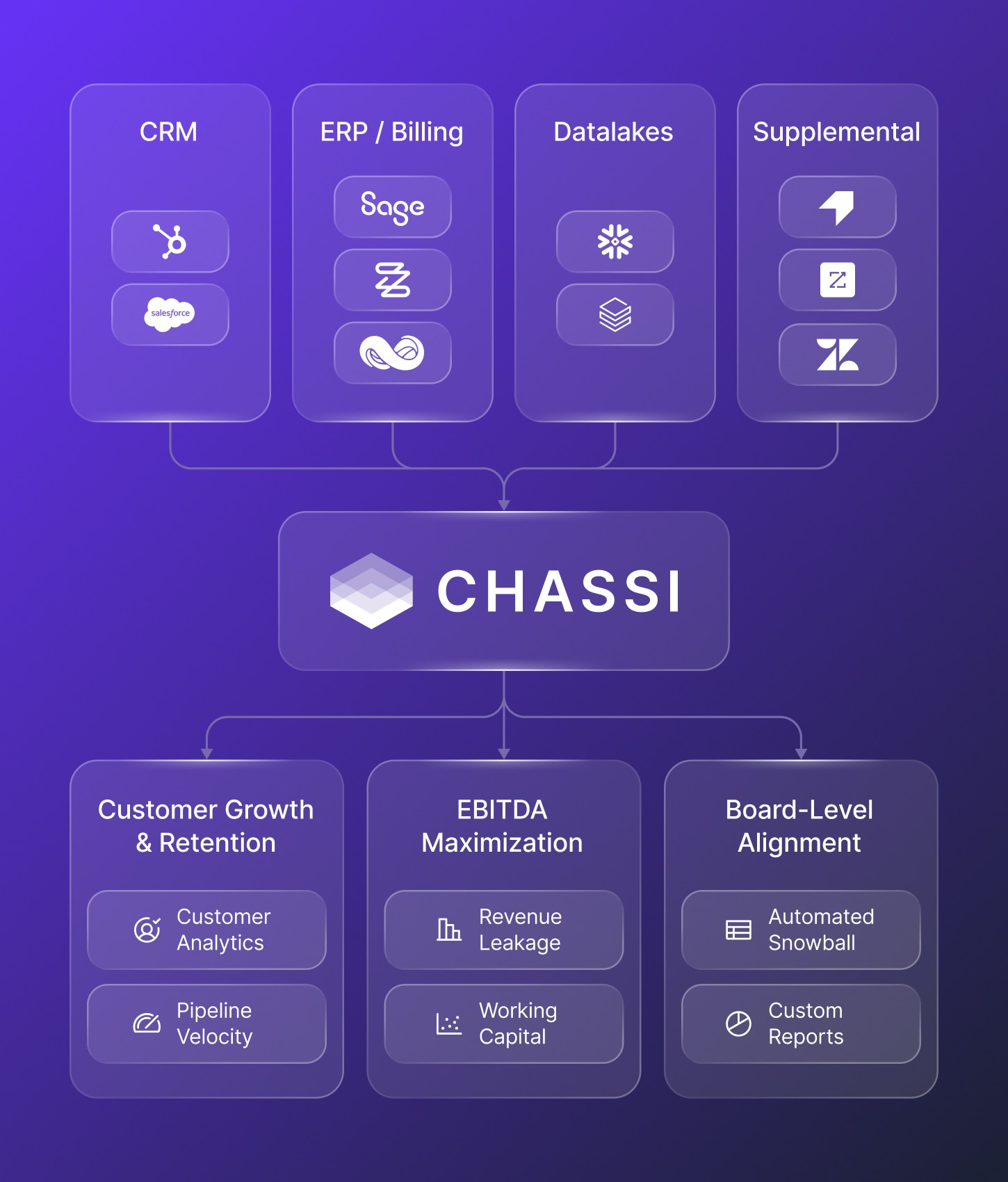
The path from data to action, without systems disruption.
Connect systems of record
Secure, read-only connection to CRMs and systems of record. No manual exports, no spreadsheet hand-offs, no disruption to sales operations.
Model stage-to-stage velocity
Chassi maps every opportunity across funnel stages and tracks movement over time. Conversion rates are segmented by business unit, industry, rep, and deal size — so you see where velocity is healthy and where it breaks down.
Report and act with confidence
You get an executive dashboard of goals and attainment, trended velocity over time, and drill-down into specific opportunities — so pipeline reviews are built on conversion data, not anecdote.
Continuous access. Updated automatically. No rebuild required before every board or QBR cycle.
Conversion data that drives decisions, not just reports.
Stage-to-stage conversion rates segmented by business unit, industry, and rep
Executive dashboard of goals and attainment — updated continuously
Trended velocity analysis across time periods to separate signal from noise
Drill-down into specific opportunities to identify where deals slow or stall
MQL to SQL conversion visibility for marketing allocation decisions
What you can do with it
Identify which stages, segments, and reps have conversion gaps before the quarter ends
Reallocate rep coverage based on where pipeline is moving fastest
Give the board a pipeline view built on conversion rates, not open-opportunity counts
Make marketing spend decisions based on velocity data and proven ICP, not volume

"Chassi gives us a level of transparency into top-line performance that was previously inaccessible or painfully tedious to produce."
Ryan Mason
CFO, Trackforce
Proven results. Rapid insights. Minimal disruption.
Objective findings with quantified impact for cash, NRR, and profitable growth.
Built from your CRM data, not a spreadsheet
Conversion data pulled directly from CRMs and updated continuously. No manual exports before every pipeline review.
Segmented the way your business works
Business unit, industry, rep, deal size. Cut the data the way your board and CRO think about the funnel.
Trended, not static
Velocity tracked over time, so you can distinguish a one-quarter anomaly from a structural conversion problem.
Finance-grade trust
Every conversion rate traces back to the same CRM source. No reconciliation debates between Sales and Finance.
We already have pipeline reporting in our CRM. What does this add?
Weekly pulls answer point-in-time questions. Pipeline Velocity tracks movement continuously, so trend changes surface as they happen rather than after a quarter close. It also segments conversion data in ways that manual reports typically don't — by rep, business unit, industry, and deal characteristics simultaneously.
Our CRO pulls a pipeline report every week. Isn't that enough?
Weekly pulls answer point-in-time questions. Pipeline Velocity tracks movement continuously, so trend changes surface as they happen rather than after a quarter close. It also segments conversion data in ways that manual reports typically don't — by rep, business unit, industry, and deal characteristics simultaneously.
How does this connect to the exit story?
New logo bookings and win rate are two of the first things a buyer examines. A business that can show consistent stage conversion trends, segmented by unit and rep, with a clear view of where GTM is efficient is a materially easier story to defend in diligence than one relying on aggregate pipeline counts.
How much of our team's time does this require?
Initial setup requires access provisioning and a brief configuration period. After that, the dashboard updates continuously. No ongoing lift from your team to maintain or rebuild the analysis.
CRM data is inconsistent. Will that be a problem?
Inconsistent CRM data is one of the most common starting points. The initial setup surfaces where data is incomplete or inconsistently structured — and that data quality view is itself useful input for a sales ops cleanup. You do not need clean data to start.
Can we build this in-house?
Sales ops and BI teams can build pipeline reporting. Building it in a way that tracks stage-to-stage velocity, segments across multiple dimensions, and stays current without a weekly rebuild is a different scope. Chassi delivers that foundation without the ongoing maintenance cost.
Ready to see where your funnel breaks down?
Get continuous visibility into pipeline movement before it becomes a forecast problem.