
The data confidence problem shows up in every board cycle
When the numbers behind your operating strategies aren't reconciled, the board doesn't just get slow reports. They get reports they can't act on.
Producing the report
Before every board meeting, someone on the finance team runs the same cycle: pull data from multiple systems, resolve discrepancies, and assemble a pack that's already slightly stale by the time it's presented.
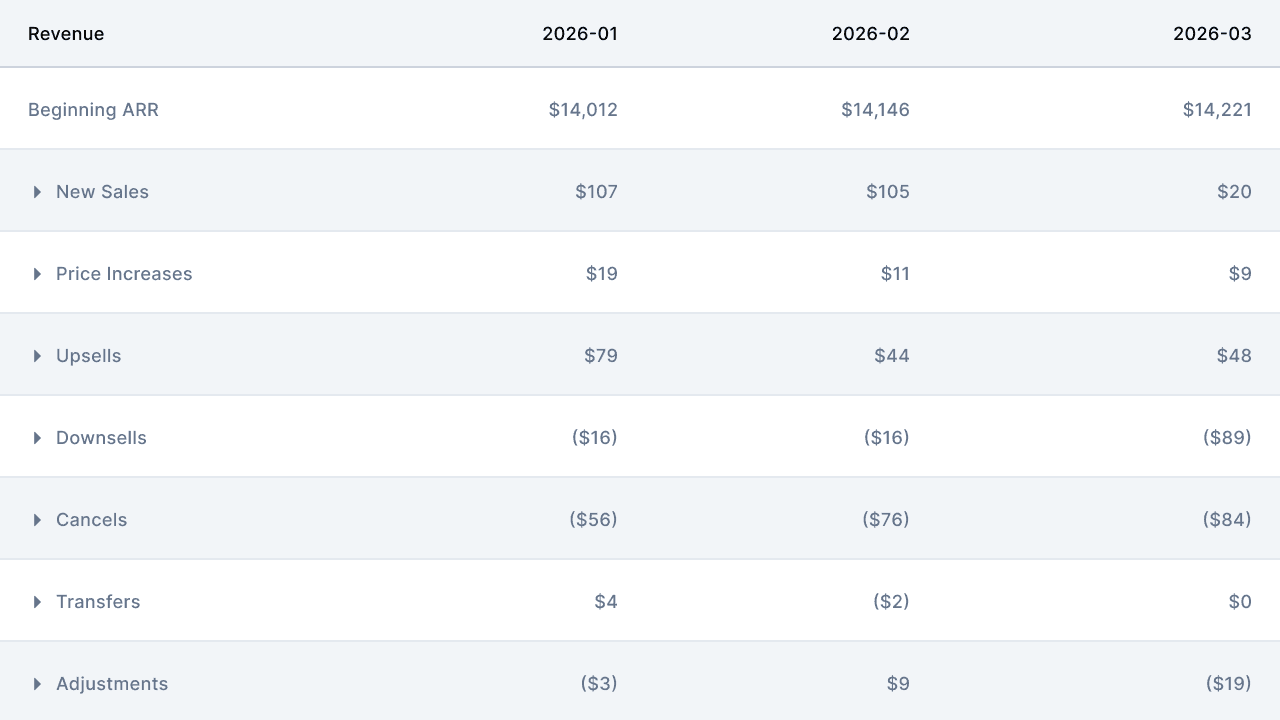
ARR numbers don't match across CRM, ERP, and billing, so reconciliation happens manually every cycle.
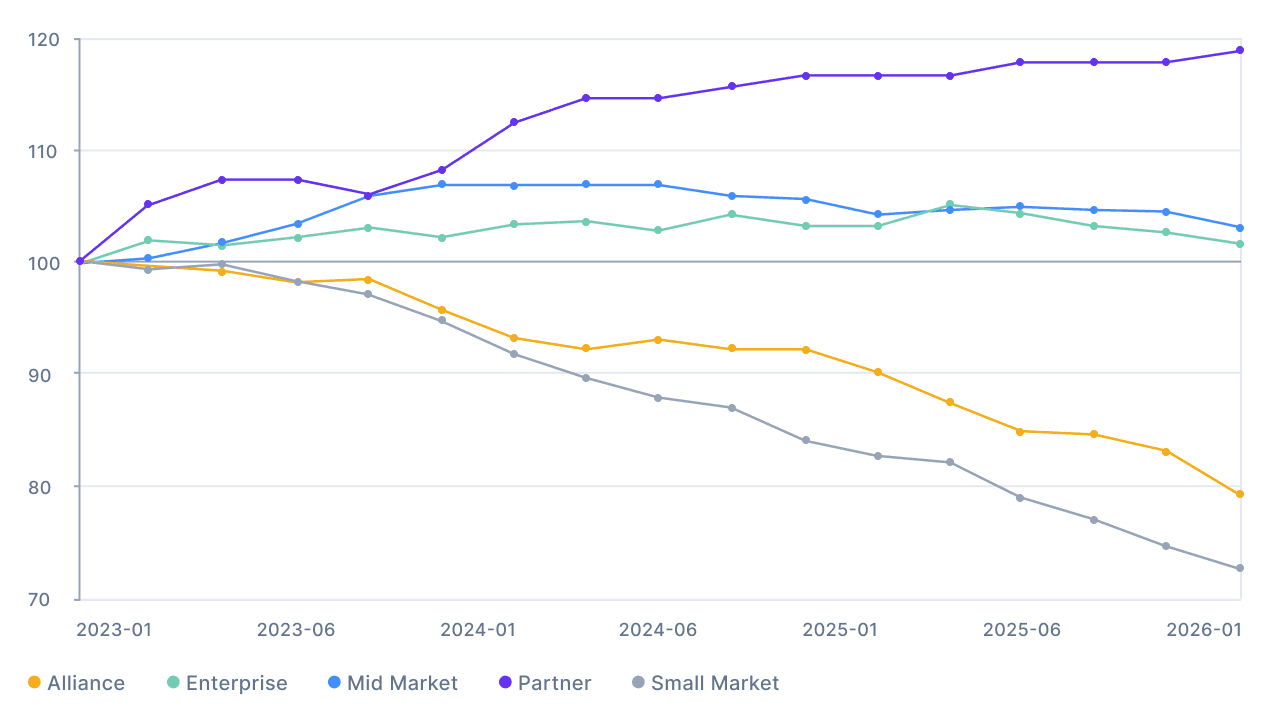
Segment-level cuts by product, cohort, or geography require a fresh rebuild each time because no automated layer exists.
New, churned, and expanded customer counts are calculated differently by different teams, so the starting point is always a negotiation.
Defending the report
The pack gets delivered. Then the board asks a question no one can answer in the room.
Which segments are driving ARR growth and which are masking contraction? That cut takes a week to produce.
GRR and NRR shift between reports because the definitions aren't standardized or the source system changed between pulls.
Follow-up questions reveal that the numbers were assembled, not reconciled — and confidence erodes from there.

How do you know you have a board-level alignment problem?
These are the signals that your reporting challenges are structural, not just a bandwidth issue.
Your board pack takes days to produce, and the numbers still get questioned.
ARR can't be segmented on the fly without a manual rebuild.
Different teams report different versions of NRR or GRR because they're pulling from different systems.
Follow-up questions from the board can't be answered in the room.
QBR prep feels like starting from scratch every quarter.
Your FP&A team spends more time assembling data than analyzing it.
The same reconciliation issues surface every cycle, but never get permanently fixed.
If these sound familiar, the problem isn't effort or headcount. It's that the reporting infrastructure was never built to automatically produce a single, reconciled answer.
Your team solves this problem by hand every month. That's the problem.
Finance teams have built reporting workflows that work. They just require too much manual effort to sustain and too much reconciliation to trust.
FP&A models are maintained manually and depend on whoever built them to update, reconcile, and defend them each cycle.
BI dashboards pull from CRM or billing independently. When those systems disagree, the dashboard reflects the conflict, it doesn't resolve it.
ARR definitions live in spreadsheets or tribal knowledge rather than a reconciled data layer, so the same number gets calculated three different ways by three different teams.
The board gets a polished pack, but the infrastructure behind it is held together by manual processes that restart every cycle.
The reporting gets done. But it's never done once, and it's never done the same way twice.

Get automated reporting that's always current and always defensible
Chassi pulls ARR data directly from your billing system and reconciles it at the customer level. The result is automated reporting your team can segment, present, and defend without rebuilding it every cycle.
Reconciles month-over-month ARR by customer, calculating new, expansion, contraction, and churn from billing data, not CRM.
Standardizes NRR, GRR, and primary SaaS metrics from a single reconciled source so definitions don't shift between pulls or teams.
Segments by product, cohort, business unit, or geography on the fly without a manual rebuild.
Updates automatically so reporting stays current between board meetings, not just during them.
Your team stops producing the numbers and starts analyzing them.
If your board pack takes days to produce, the numbers shift under questioning, and segment-level cuts require a rebuild every time, Automated Snowball solves that at the infrastructure level. It pulls directly from your billing system, reconciles ARR at the customer level, and delivers reporting that's always current, always segmentable, and always defensible. Your team analyzes the data instead of producing it.
How it connects to the broader picture
The same billing data that powers Automated Snowball is what Revenue Leakage reconciles against and what Working Capital traces through O2C and P2P. So the board reporting layer and the operational findings beneath it always tell the same story.
Our FP&A team already produces a board pack every month. What does Snowball add?
The pack gets produced. What Automated Snowball changes is the infrastructure behind it. Instead of pulling from multiple systems, resolving discrepancies manually, and rebuilding segment cuts each cycle, your team works from a single reconciled ARR source that updates automatically. The output looks the same to the board. The effort to produce it drops significantly, and the numbers hold up under questioning.
Our ARR numbers are close enough. Why does reconciliation at the customer level matter?
Aggregate ARR can look clean while segment-level problems accumulate underneath. When a buyer or auditor asks for ARR broken out by product, cohort, or geography, "close enough" at the top line doesn't hold. Snowball reconciles at the customer level so any cut of the data produces the same answer, from the same source, without a manual rebuild.
We already use a BI tool for reporting. How is this different?
BI tools surface what your systems say. When CRM, ERP, and billing disagree, the dashboard reflects the conflict rather than resolving it. Snowball reconciles those sources before reporting, so the number your board sees traces back to a single version of the truth.
How long does it take to get reporting live?
Your Chassi team will set clear expectations during scoping. Initial setup requires read-only access provisioning and a configuration period. Once live, reporting updates automatically without ongoing lift from your team.
What systems does Automated Snowball connect to?
Chassi’s Automated Snowball pulls primarily from your billing system, which is the authoritative source for ARR movements. CRM and ERP data are layered in for reconciliation and segmentation. Common systems include Salesforce, HubSpot, NetSuite, Zuora, Stripe, and Sage.
Does this replace our existing reporting process?
It replaces the manual rebuild that happens before every cycle. Your team's judgment about what to present and how to frame it stays intact. What changes is that the underlying numbers are always current, always reconciled, and always segmentable without starting from scratch.
Will this disrupt operations?
No. Read-only connections to systems of record. No system changes required.
Make board reporting the easiest part of the cycle
Walk through the platform and see how Chassi automates ARR reconciliation so your team can stop producing the numbers and start using them.